Wholesale Corrugated Box Supplier


Shandong Xinxinghua Environmental Protection Technology Materials Co., Ltd. is a carton packaging company that integrates R&D, production, marketing, and sales. Our products include Corrugated Box, Paper Box, Cake Box, Fruit Box, Food Tray Box, Fry Box, Wrapping Paper, Greaseproof Wrap Paper.


Why Choose Us?

High Productivity

We have a factory area of 270,000 square meters and with more than 600 employees, with more than 100 carton processing, and automatic die-cutting, folder-gluing, milling, and sewing machines in order to meet all customer needs.

Famous Partners

The company has established long-term cooperative relations including Mengniu Dairy, Hisense Electric Appliances, Jinluo Food, etc.


Professional Advanced Equipment

Our company has an advanced paperboard production line capable of producing two to seven layers of paperboard. We have a world-famous Roland four-color computer offset printing machine, computer automatic four-color and six-color ink printing machine, and the G D1628 high screen flexographic ink printer.

Rich Experience

Shandong Xinxinghua Environmental Protection Technology Materials Co., Ltd. was established in 1995. We are a factory with more than 28 years of experience in the food paper packing industry.


First 1234 Last 1/4
Definition of Corrugated Box


Corrugated cartons are made up of a few layers of material rather than just a single sheet like cardboard. The three layers of corrugated include an inside liner, an outside liner, and a medium that goes between the two, which is fluted. Corrugated is a resilient material that is also lightweight an important consideration for those shipping a significant number of packages.


What are Advantages of Corrugated Box?


Protectve Against Outside Elements
The productive strength of corrugated boxes includes their ability to keep moisture and bacteria out. They serve as a stable cushion and come in sizes that can vary according to the items to be shipped.
The wavy fluted medium provides a lightweight layer of protection. Corrugated fiberboard offers excellent protection against the elements as well as the wear and tear of shipping. The lightweight of corrugated fiberboard makes it a better shipping material than wood or plastic. It's also far less expensive and easier to recycle, making it better for the environment and pocketbook.


Customizable to Demands
Though there are standard shapes and sizes of corrugated boxes, they can easily be manufactured to fit any type of circumstances and demands. An additional part of their customization is the ability to have their sides or top and bottom printed with company logos and designs.
Coatings, treatments, different adhesives, and flame-resistant can all be applied. Corrugated boxes come in all sizes to be easily folded into different shapes to make a perfect fit.
High-quality custom designs make a product recognizable. Good quality shipping materials reinforce the values of a company‘s operation and the power of its brand. By having a well-engineered and creative display on a corrugated box, a company creates a stronger, lasting brand identity.


Cost-Effective and Reusable
The main reason that corrugated boxes have become so widely used is their cost compared to other forms of containers. Their use does not require increased labor, expensive tooling, or specialized equipment. Once they have met their usefulness, the corrugated fiberboard can be returned for recycling and remanufacturing.


Compatible with Branding
Every company is constantly devising methods to make their image and name known. One of the least expensive methods for achieving this goal is by placing the name and brand on a corrugated box, which can have any form, color, design, or configuration. The smallest company can appear to be a major competitor by creating a sophisticated and quality design to put on their shipping boxes. Custom branding impresses customers and presents a professional appearance.


Biodegradable and Eco-Friendly
The most important feature of corrugated boxes is their ability to be recycled and repurposed. In this age of environmental awareness, every company is striving to develop a way to protect and sustain the environment. Since over 70% of the material used to produce corrugated boxes is recyclable, corrugated boxes are an essential part of a company‘s efforts in proving it is environmentally wise. According to governmental regulations, corrugated boxes are assembled using glues and materials that are non-pollutant and ecologically friendly according to governmental regulations.


Lightweight Materials
A major factor in any shipping operation is the control of cost, which can be increased by shipping heaving materials in heavy boxes. Since corrugated boxes are lightweight but strong, they are the perfect solution to weight shipping problems. Regardless of their weight, corrugated boxes still have the strength to ensure the safety of any product.


Flexible Paper Types
One of the advantages of corrugated fiberboard is its many types, including single, double, and triple walled, which can be produced from a variety of paper types depending on shipping needs. Any product that a manufacturer can produce can be shipped using a corrugated box.


Inexpensive and Custom Printing
Corrugated fiberboard is an inexpensive material for printing company graphics, logos, brand names, and graphics. Included in the production of most fiberboard is a customizable printing process for the application of designs. Custom printing is a vital part of the branding process and is one of the least expensive since it does not require additional advertising cost or an advertising agency. The layer of flute protection and flat surface for printing make corrugated boxes the bridge between marketing and logistics.


Product Safety
A corrugated box is an insurance policy for products that have to travel long distances through various conditions to make it to market. The flutes and walls of a corrugated box may be the only defense a product has against the environment and the ill treatment it may receive during shipping. The extra cushioning is protection against shocks, abrasions, vibrations, and being tossed about on a plane, truck, or train. Aside from preventing damage from abuse, corrugated boxes can protect the most fragile products, such as perfume, colon, and chemicals, from exposure to dirt, grim, dust, and bacteria. The fiberboard of a corrugated box serves as a shell casing that ensures the safe delivery of products.


Sustainability
A major dynamic in modern business is sustainability, where only as much is used as needed to match what is being resupplied. Corrugated boxes fit easily into the sustainability model since they can be repurposed at the end of their usefulness and put back into the supply chain. This factor removes the concept of diminishing returns since a company can never run out of corrugated material or boxes.


What are Features of Corrugated Box?
Environmentally Friendly Customizable Pizza Box

Stronger than Cardboard

Safe, sturdy and protective, corrugated boxes are stronger than cardboard, so you can feel confident that whatever you put inside will stay safe and sound. Corrugated packaging is also crush and pressure-resistant.

Environmentally Friendly Customizable Pizza Box

A Wide Range of Sizes

Corrugated packaging is available in a wide range of sizes. Although it’s strong, it’s also lightweight, making it a great fit for nearly any type of product that needs to be protected, but without the added weight.

Customizable Recyclable Colorful Pizza Boxes

Can Be Broken Down and Reused

Corrugated boxes can be broken down and stored easily or transported without affecting the structural integrity of the packaging.

Customizable Recyclable Colorful Pizza Boxes

Good for the Environment

The packaging material itself is made from recycled and renewable materials, such as Kraft, making them an eco-friendly packaging option that consumers will appreciate.


Common Types of Corrugated Box
 

Regular Slotted Container (RSC)
The most common is this one. Consider a standard shipment box. All of the flaps on this box are the same length, and when the box is closed, the two outer length flaps meet in the middle. The flaps will need to be taped together.


Full Overlap Container (FOL)
Because both sets of outside flaps fully overlap, making the box double-layered on top and bottom, this sort of box has increased strength.


One Piece Folder (OPF)
You've probably seen one of these boxes if you've ever ordered a book or other media materials online. They're folded into a box after being creased and slotted. They're sleek but functional.


Full Telescopic Design (FTD)
This box has a top and bottom that fit over each other, as the name implies. Its increased strength comes from the twin walls. Of course, these containers must be sealed in some way. For heavy-duty loads, corrugated boxes are usually sealed with packaging tape, tuck-in flaps, or strapping.
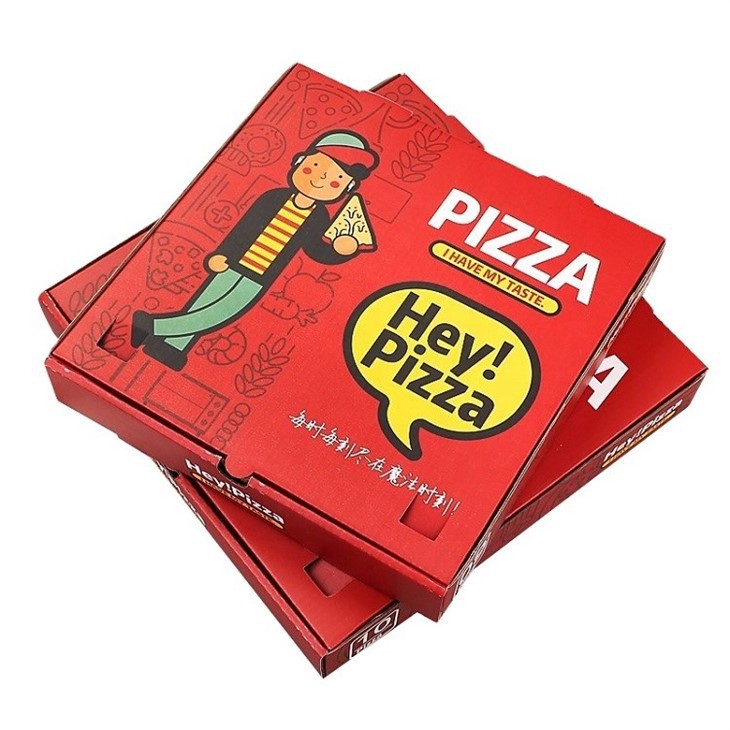
 

Customizable Recyclable Colorful Pizza Boxes


Corrugated Flute Grades

A-Flute
1/4” is the first type of corrugated flute. This flute grade has the highest protection and cushion qualities. It is very good at handling compression and stacking and is often used for packaging fragile items.


B-Flute
1/8”. This flute appears much thinner than others but is still quite strong, with excellent puncture and crush resistance. B-flute has outstanding all-around performance for various packaging or as additional material for padding and dividing. It even has a flatter surface for higher-quality printing and easy die-cutting.


C-Flute
3/16” is flexible and one of the corrugated boxes’ most versatile flute grades. It has average crush resistance, stacking strength, and printing properties. You have likely seen C-Flute used for shipping boxes but also for packaging glass, dairy, and furniture products.


E-Flute
1/16” is not typically used for shipping. E-flute thickness is on the thinner side of flute grades, so it is often used as an alternative for paperboard folding cartons. However, you may still use E-Flute for cosmetics, fragile glass, ceramics, and other small and delicate products. E-Flute has excellent compression strength, crush resistance, and a relatively flat surface for high-quality printing applications.


F-Flute
1/32” has protective qualities similar to E-Flute but with an even smoother surface for high-quality printing. It is common for you to use F-Flute for clamshell packaging in the US fast-food industry, but in Europe, this grade of corrugated fluting is a standard option for specialty and retail packaging.


Applications of Corrugated Box


Food Industry
In the manufacturing process of corrugated boxes, the glue used to connect the flutes and liners is made from water and starch to avoid contaminating fresh fruits and vegetables. There are many benefits to using corrugated boxes for shipping food. The most important of the benefits is their safety and resistance to bacterial infection. Various research studies have shown that corrugated boxes keep food fresher longer.


Office Supply and Stationary
The main concern when shipping or storing office supplies, especially paper, is the possibility of supplies being damaged in transit or while sitting on a shelf. The strength and cushioning of corrugated boxes prevent this from happening and remove the worry of having damaged work materials.


E-Commerce
In the e-commerce industry, boxes serve multiple purposes, the most important of which is an efficient and highly responsive supply chain, a critical part of e-commerce. Corrugated boxes are the backbone of the e-commerce supply change and have been growing in use over the last two years. A challenge for the e-commerce industry is the shipment of smaller quantities to a growing number of unique and unusual destinations. Corrugated boxes offer the type of security and safety that the e-commerce industry demands.


Textiles
Online shopping has led to a rapid rise in the use of boxes for the shipment of textiles. Billions of dollars are being invested in shipping materials that will guarantee safe, reliable, and damage-free delivery. Since customer satisfaction is the key to maintaining and keeping customers, corrugated boxes have become a significant part of the planning for meeting customer demands.


Electronics
Great care has to be taken when choosing boxes for the shipping of electronics and electronic components. These types of items are fragile and can be damaged easily by not being packed correctly. For this reason, corrugated boxes are used and supplemented with packing materials for added protection. The greatest concern is the amount of stress placed on components in the handling of the box. The shock from such stress can damage a circuit or loosen a connection. The cushioning found in a corrugated box alleviates worry and prevents damage, ensuring that an electronic product arrives on time in perfect condition.


Healthcare
Much like the needs of the electronics industry, materials shipped for healthcare needs require the same type of care and concern. Delicate and sensitive medical instruments can be easily damaged by poor packaging and mishandling. In the case of medications, there are several requirements regarding shipping conditions to ensure that they arrive safely. The wide assortment and selection of corrugated boxes make it possible for pharmaceutical companies to ship their products with confidence, knowing that medications are well-protected and safe.


Batteries
Shipping materials for the battery industry have to meet strict guidelines and regulations for safety and legal compliance. The fiberboard used to produce these specially designed boxes follows the established guidelines of the corrugated box industry. Aside from the use of specially produced liners, each battery shipping container has to be clearly marked regarding the contents with appropriate safety guidelines.


Automotive
The shipping of auto parts requires careful preparation since they come in a wide variety of sizes and shapes. The basic rule is to protect the part to be shipped from harm by providing packing material that is sturdy, able to handle weight, and cushioned.


Military
When supplying shipping materials for the military, there are several Mil-Spec regulations that must be followed. Unlike other industrial applications, the military provides a list of requirements and a description of production methods for producing materials for their use. The first and most obvious requirement for military boxes is that they be sturdy. Aside from being strong and sturdy, corrugated boxes must be designed to withstand a variety of climatic conditions, which include high humidity, extreme temperature changes, and wet environments.


Publishing
For publishing companies, the shipping of books, documents, magazines, and other printed material has the major problem of weight since a large amount of printed material can be significantly heavy. Once the problem of weight is resolved, the next concern is moisture, which can severely damage printed matter. Though the exterior of corrugated boxes is coated with protective finishes, it is important to line the interior of the box with plastic or some form of wrapping material as an extra layer of protection from moisture. The most obvious solution is to use boxes that have a triple thickness of fiberboard.


The Considerations for Buying
 
01/

Select a Flute Profile
Those arch shaped flutes in the middle layer of a corrugated board are available in different flute profiles, typically rated as A, B, C, E, or F.A flute provides the thickest profile, and is ideal if you are shipping a product that needs extra cushioning. It also gives cartons extra strength for stacking purposes.B flute was designed to pack canned goods, and is the preference for high-speed, automatic packing lines.The most commonly used flute size is C, and is typically used for packing furniture, glass, and other heavy, yet fragile goods. It is actually thicker than the B flute profile.E and F flutes are the least durable, but have many applications for retail because they provide a surface that is suitable for printing.

02/

Choose the Board Type
Corrugated cardboard specificationsYou then have four options for the type of board to be used in your corrugated packaging.Single-face board is when only one sheet of liner is attached to the corrugated layer. It’s available in rolls and wrapped around products for extra cushioning.Single-wall is the most standard option. This consists of a single layer of corrugated medium sandwiched between two liner sheets. Boxes with single-wall board are what you typically receive consumer products and goods in.To make a box more durable, you can add extra liners and layers of the corrugated medium. Two sheets of corrugated medium and three sheets of liner create a double-wall board. A triple-wall board is created with three layers of corrugated medium between four liner sheets, making it the strongest of all the options. This is typically used to ship industrial parts or heavy consumer goods.

03/

Determine the Appropriate Board Grade
Corrugated Cardboard ECT BoardNow that you’ve selected these corrugated cardboard specifications, you can choose the board grade that will suit your needs.If you need your corrugated cardboard box to hold up to stacking pressure, you will want to choose ECT board. ECT stands for Edge Crush Test, a measure of how much stacking pressure a box can take before collapsing.The chosen flute profile will influence the ECT measurement of your material. This value starts at 23ECT for a single wall, to 120ECT for a triple-wall. The higher the ECT value, the more your corrugated package can withstand. This kind of board is best when you are stacking your boxes on top of each other, such as when they are in a warehouse or on a pallet.

04/

Pick the Right Shape and Size
Corrugated cardboard boxes come in a number of shapes and sizes. From regular slotted, squared-shaped containers, to full telescope designs for fragile items, there are a variety of styles to choose from. You can even select a one-piece design, often referred to as a One Piece Folder (OPF). This is especially great when you want an unbroken printing area for graphics.


Our Factory


We can produce different sizes of pizza boxes, such as corn starch container with compartment and so on, wedding pastry baking packaging boxes, good printing quality, cheap price, packed in plastic bags or cartons.


20230724102018af5fd6207640414fb9dea113f2ada715
productcate-1-1


Our Certificate


We are already certified to ISO9001 and ISO14001.


productcate-1-1


Contact Us
write to us
Email: jackshi@xinghuapackaging.com
visiting us
Address: Xiwaihuan Road, Wanggou Town, Lanshan District, Linyi City, Shandong Province, China
Contact directly
Phone: +8618763756839
Regina Wang: regina@lyxinghua.com +86 18354457607
Rander Hu: rander@lyxinghua.com +86 13355033101
Tony Li: tony@lyxinghua.com +86 17653955018
Anna Zhao: Anna@xinghuapackaging.com +86 13964896152


Frequently Asked Questions


Q: How is the Corrugated Box made?

A:In order to understand what corrugated boxes are, you first have to understand how they’re made. Made predominantly from trees, which are a renewable resource, corrugated packaging is the most recovered packaging material on the planet. It is sustainably manufactured from trees.
When corrugated is recycled, old corrugated containers (OCC) are dropped off, sorted, compacted, and baled for space-efficient storage. These bales are then transferred to a paper mill where they’re then broken down and the corrugated is inserted into a repulper, which is like a large blender.
In the repulper, they’re agitated to form a slushy pulp of fiber and water. The contaminants are removed and the remaining fiber solution is poured out onto a moving screen that allows the water to drain away, forming a continuous fiber mat. This mat is then pressed between rollers to remove any additional water.
The wet, continuous fiber is wound through a dryer where the top and bottom of it contact heated surfaces of drying cylinders, removing any remaining moisture from the paper. Once this process is finished, the paper is rolled onto a large reel spool where it is then slit and rewound into individual rolls, which is when the recycling process is considered complete. These paper rolls are shipped off to sheet feeders or corrugators where they will be converted into corrugated sheets, and later transformed into sustainable corrugated packaging. 

Q: What are the benefits of Corrugated Box?

A: Enhanced protection
Its multi-layered design provides a stable cushion that keeps products safe during transportation and handling. Corrugated also provides a durable barrier between your products and any outside moisture, keeping them dry on the road.
 
Customization options
Corrugated board can be customized in a number of ways. From thickness and size to coatings, adhesives, graphics and shapes, businesses can tailor almost every aspect of corrugated board to suit their product and brand.
 
Cost-effective
Its lightweight, customizable design makes corrugated board one of the most cost-effective options. There’s no need for costly labor, expensive tools or unnecessary bulk. Corrugated boxes can also be recycled and reused if needed.

Q: What does the Corrugated Box consist of?

A: There are three types of walls for a corrugated box: single, double, or triple.
Single Wall - This is the simplest corrugated wall design, with a single outer layer and inner layer with fluting between the two layers.
Double Wall - The double wall design adds an additional layer of fluting to produce a box capable of handling heavier and larger items.
Triple Wall - As the name implies, triple wall corrugated boxes have three layers of flutes. Each layer has differently-sized flutes to add stability. The added layers maximize cushioning and compression strength.
There are five common types of corrugated flutings, which are A, B, C, E, and F. Though these are standard, manufacturers and designers can create and construct customized versions, which can be combinations of the standard versions or unique, unusual designs.
A – is the original type of flute at 36 flutes per foot and is used for double wall applications and thick corrugated padding.
B – has the second highest arch size with 49 flutes per foot and has stacking strength and crush resistance.
C – most commonly used flute with 41 flutes per foot for cushioning, stacking, and printing properties.
E – second common flute, environmentally friendly with 90 flutes per foot.
F – has small, tighter flutes, and is environmentally friendly with128 flutes per foot.
Different Sizes of Flutes
Aside from the five above flute styles, there are specialty flutes that are combinations of the above flutes or that fall between the regularly used flutes, such as D flutes. Other special flutes include EE, EF, and BC, which are used with double wall flute profiles. Flutes such as N and O are rarely used and are extremely small at less than half a millimeter.

Q: What paper is used in Corrugated Box?

A: Though the thickness of fiberboard is important in determining its strength, a key defining feature is the type of paper used for liners and flutes. The types of paper used for the liners of corrugated fiberboard are Kraft, test 2 and 3, chip, bleached white, white top, mottled Kraft, oyster, semi chem, and waste-based.
 
Kraft Paper
Kraft paper or paperboard is produced using the Kraft process. It has high tear resistance, is very durable, and is free of lignin, which is a bonding agent in wood that is dissolved in the Kraft process by sodium sulfate. The lack of lignin adds to the strength of the paper. Kraft paper is made from softwood pulp with long fibers that increase the strength of the paper.
 
Bleached White Kraft Paper
For the creation of bleached white paper, Kraft paper is put through a process that involves the use of bleach and assorted chemicals, which whitens and purifies the natural Kraft pulp.
The purpose of this process is to strengthen the paper, which makes it useful for packaging heavier products. Kraft bleached white paper is known for its rigidity, strength, and durability.
 
Test 2 and 3 Paper Liner
Test 2 paper liner is made of partly recycled paper and is very much like Kraft paper exception for its burst strength. Since it does not have sufficient burst strength, it is normally used as an outside liner where puncture and water resistance are not essential.
Test 3 paper is fully recycled paper. It has a double layer and is referred to as duplex. Since it is not virgin stock, it is not as strong as Kraft paper and is normally used as an inside liner.
Test liners are not as strong as Kraft liners because of their high content of recycled materials. It is not possible to have a single description of test liners since they are divided into different classes, which change depending on their country of origin.
 
Chip Liner
Chip liners are made of uncontrolled recycled materials, which means they are of lower quality and do not perform as well as other liners.
 
Semi-Chemical Flute
Semi-chemical fluting is produced from hardwood that has short fibers. The lignin is only slightly removed from this type of paper pulp, which produces very dense and high compression strength papers.
When the semi-chemical paper passes through a corrugator, the heat in the process creates rigid fibers as the material cools, making it crush-resistant.
 
Waste Based Flute Medium
Fluting is normally produced using waste-based fluting medium due to its enhanced properties. It is made from 100% waste-based material, which has been chemically enhanced and reinforced with starch. The starch additive in waste-based fluting takes the place of natural lignin found in the pulp from hard and soft woods.
Waste-based fluting medium grew out of environmental concerns and the need to recycle waste materials. The majority of fluting material used in manufacturing of corrugated fiberboard is waste-based.

Q: What are the coatings for Corrugated Box?

A: One of the stipulations of coatings is that they fit into the need to have corrugated boxes recyclable and compostable. The box manufacturing industry works diligently to produce coatings that meet these requirements. Though it may be presumed that coatings are applied to just the facing part of a box, in actuality, liners and paper have coatings applied as well. All of the various types of coatings are in accordance with the mandate to have the board being recyclable and compostable.
Conductive - Conductive coatings are electrostatic discharge (ESD) coatings that provide a shielding layer against ESDs. It is easy to handle and fully recyclable.
Waterproof - Waterproof coating does more than protect boxes against water damage. They also provide resistance to oil, grease, and vapors. Waterproof coatings have a wax-impregnated appearance and are designed to carry greasy, oily industrial components and fish, following Food and Drug Administration (FDA) requirements.
Color - Color coatings can be applied in any color and are designed to match the color of the brand being packaged. Once the color coating is applied, branding information can be printed on a box.
Scuff Resistance - Scuff-resistant coatings are sturdy and abrasive resistant. They are designed for packaging products that may damage the facing of the box during shipping. A strong scuff-resistant box eliminates the need for additional packaging material such as bubble wrap or Styrofoam.
Corrosion Protection (VCI) - Volatile corrosion inhibitors (VCI) are additives used in packaging materials to protect against corrosion. It is injected into the corrugated board and provides continuous protection even if the packing is opened. The main purpose of the VCI-protected board is to provide shipping alternatives for ferrous metals.
Ultraviolet (UV) - UV rays can have a negative effect on the chemical bonds of products. However, UV coatings are eco-friendly and have exceptional strength. Several types of coatings can be applied to corrugated boards to protect products from UV rays.

Q: What are the types of Corrugated Box?

A: Slotted Boxes
A slotted box is made from corrugated fiberboard that has been scored and slotted so that it can be folded and shaped to form a corrugated box. Of the many types of boxes, the slotted type is the most common and widely used. There is an endless number of products, chemicals, and parts that can be shipped or stored using slotted corrugated boxes.
The term slotted box encompasses and defines an assortment of box designs that are described below.
Regular – Flaps are of the same length, with the two outer flaps being half the width of the container, which meet at the center of the box when folded.
Half – The half-slotted corrugated box is exactly like the regular version but is missing one set of flaps to form the top.
Overlap – The flaps are the same length, with the outer flaps overlapping. To secure the shape, the overlapping flaps are stapled. This design has greater length than width.
Full Overlap – All of the flaps are the same length, with the top and bottom flaps overlapping for greater support for heavier items.
Center – For a center slotted corrugated box, the inner and outer flaps have different lengths and meet in the center when folded.
Divider – The divider container is similar to the other slotted versions but has a pre-glued, internal divider in the center of the interior.
Telescope Boxes
Telescope boxes get their name from their two sets of foldable sections, body and cover, that make up their design. Once the body and cover are folded, they fit over each other. The cover serves as the lid, while the body in the container receiving the shipped item.
 
Rigid Boxes
A rigid corrugated box comes in three pieces with two end pieces and the body of the box. The two end pieces or panels are folded into the ends of the box, with the remainder of the box being one piece that folds together. The flaps or joints are the part of the box that make it rigid.
The self-erecting version of a rigid corrugated box is one piece of scored corrugated fiberboard that can fold into a slotted or telescope-style container.
 
Folder Boxes
Folder corrugated boxes are like the self-erecting rigid type. They consist of one piece of corrugated fiberboard that has been scored so it can be folded together. The types of folders include one piece, five-panel, and tray.
The one piece has a flat bottom with flaps that form the sides and ends, with the extensions of the side flaps forming the top. The five-panel version folds in one direction, with the second and fourth panels being the top and bottom and the fifth panel being a side. Trays can be five or four-panel. The five-panel version has a top, while the four-panel one does not.
 
Tucktop Auto Bottom Boxes
The tucktop corrugated box was designed for quick, efficient, and easy setup. The structure of the box has been completely pre-glued. Initially, the box is flat, with the bottom tucked into the body of the box and the top flaps and top extended. When the sides of the box are separated and opened, the bottom flattens to allow items to be loaded. The assembly of the box takes place in one rapid motion.
A variant of the tucktop auto bottom corrugated box is the tucktop snap lock bottom, where the bottom is not pre-glued, and is formed by four flaps that fold together. The differences between the two are setup time and cost.
 
Double Cover Corrugated Boxes
The body of a double cover corrugated box is formed by a square or rectangular tube. The top and bottom of the box are interchangeable telescopic covers. The pieces are stored flat. When required, the top and bottom telescopic pieces are slot-assembled and the tube is opened to allow positioning of the telescopic pieces.
A version of the double cover corrugated box is the interlocking type, which is a more secure and tight-fitting version. There are interlocking flanges on the covers and tube to reinforce the structure of the box. The design is for shipping heavy items such as appliances and heavy equipment.

Q: What is the cardboard thickness of Corrugated Box?

A: Liner Board – The ‘face’ of the fiberboard sheet. You glue the flute onto this board.
Single Face – Consists of one liner board with glued flute visible on one side.
Single Wall – The most common thickness. Two liner boards with fluted fiberboard glued in between.
Double Wall – Three sheets of liner board and two fluted fiberboards in between.
Triple Wall – Four sheets of liner board and three fluted fiberboards in between. This option can withstand heavier weights up to almost 300 lbs but is less flexible.
Examining a little further with double and triple walls, different combinations of flute grades are possible with these options. Some industry standard combinations include:
AC Flute – A mix of the two most protective corrugated grades. AC Flute is excellent if you need extra protection for harsh shipping and handling processes. 
BC Flute – An outstanding all-around performer, this combination provides high-level transit protection and is common for shipping boxes.
EB Flute – Provides superior transit strength and safety, while the outer E-Flute allows for an excellent, high-quality printing surface.

Q: What Is Packaging Certification Testing?

A: Of course, if you've gone to the work of figuring out what flute grade and wall type you'll need, you'll want some confidence that the box will perform as expected. And, in the end, that means safeguarding the contents of the box. 
Everyone wants a box that will keep their belongings safe. No one wants to find their packaging crumpled and the items inside damaged.
Corrugated boxes go through a thorough testing process when it is needed. Depending on the retailer, or situation you are in, you might need to go through one yourself.
Here are four of the main tests conducted for corrugated boxes:
Edge Crush Test (ECT)
The Edge Crush Test determines the box's stacking strength, which can help you determine things like pallet shipment durability. ECT is a laboratory test procedure that involves compressing the board's edge between two plates. It's expressed in pounds per linear inch and is used to calculate a box's maximum compression force.
 
Bursting Test (Mullen)
The force required to rupture or puncture corrugated cardboard is measured in the Bursting Test. This test determines how well a box will protect the contents of the box during shipping.
 
Flat Crush Test (FCT)
The Flat Crush Test assesses corrugated paperboard's resistance to flute crushing. Whether you pick digital or offset printing, this will help you calculate how much pressure you can safely apply to your box throughout the printing process.
 
Water Absorption Test (COBB)
Under defined settings, a Water Absorption Test determines how much water corrugated fiberboard absorbs over a period of time.

Q: What Are Flutes In Corrugated?

A: The Flute is C-Shaped curls in between to the two substrates, also called "corrugation". It is used to strengthen or reinforce the walls of your packaging. They look like wavy c-shaped lines that are glued to a paperboard. Fluting in the box gives your packaging strength and helps withstand any damage.
The flute size influences the thickness of the box walls and the stacking strength of the box. Flutes are identified by a letter that indicates their size. They're counted by their thickness and the number of flutes per linear foot.
The most popular flute sizes are:
A Flute
At 1/4" thick, the A-Flute (33 flutes per linear foot) is the biggest flute. Because of its thickness, it provides a lot of protection and is a fantastic choice for fragile things.
B Flute
B-Flute is 1/8" thick and has 47 flutes per linear foot. This is much thinner than A-flutes, but it has a surprising amount of strength. It’s often used for counter displays or canned goods. Die-cut designs are common with this flute.
C Flute
3/16" thick C-Flute (39 flutes per linear foot). Because it's the most popular option for shipping boxes, this is definitely the one you're most familiar with. 
E Flute
E-Flute (90 flutes per linear foot) is extremely thin, measuring only 1/16" thick. It lacks the strength of the larger flutes, although it does have some benefits. For folding carton boxes, it's occasionally used instead of paperboard. It's easy to store and use, and it prints well.
F Flute
F-Flute (125 flutes per linear foot) is the narrowest of the flute classes at 1/32" thick. Because of its smooth surface, printed designs will appear sharp.

Q: What are the styles of Corrugated Box?

A: SLOTTED BOXES
These boxes are generally made from a single piece of corrugated fiberboard. The blank is scored and slotted to permit folding. Boxes are shipped and stored flat and assembled as needed by the user. Some of the most common types include:
Regular Slotted Container (RSC) — All flaps have the same length, and the two out flaps are one-half the container’s width, so that they meet at the center of the box when folded. The RSC is the most common box style.
Half Slotted Container (HSC) — Same as a Regular Slotted Container (RSC), but without one set of flaps.
Overlap Slotted Container (OSC) — All flaps have the same length; the outer flaps overlap by one inch or more. The box is usually closed with staples driven through the overlap area. This style of box is used when the length of the box is considerably greater than the width, resulting in a long gap between the inner flaps. The sealed overlap helps to keep the outter flaps from pulling apart.
Full overlap Slotted Container (FOL) — All flaps have the same length (the width of the box). When closed, the outer flaps come within one inch of complete overlap. This style is especially resistant to rough handling and provides extra product cushioning and stacking strength.
Center Special Slotted Container (CSSC) — Inner and outer flaps are cut to different lengths. Both sets of flaps meet at the center of the box. This style is especially strong because both the top and bottom have double the thickness of corrugated board. The inner flaps, with no gap, provide a level base for products.
Center Special Full Overlap Slotted Container (SFF) — Inner and outer flaps are cut to different lengths. When closed, the inner flaps meet at the center of the box, and out flaps fully overlap. With three full layers of combined board over the entire top and bottom, this style provides extra cushioning and stacking strength.
 
TELESCOPE BOXES
These boxes usually consist of top and bottom pieces that fit over each other. “Telescope Style” generally describes a box where the cover extends over at least two-thirds of the depth of the bottom piece, where a Box with Cover indicates a box where the cover extends less than two-thirds of the depth. Common types include:
Full Telescope Design Style Container (FTD) and Design Style Container with Cover (DSC) — Two-piece boxes made from two scored and slotted blanks (trays).
Full Telescope Half Slotted Container (FTHS) — The two-piece body is made from two half-slotted containers.
RIGID (BLISS) BOXES
Rigid Boxes include two identical end panels and a body that folds to form the two side panels, an unbroken bottom and the top. Flaps are used to form the joints. Once the joints are sealed, the box is considered rigid.
SELF-ERECTING BOXES
Self-Erecting Boxes typically feature regular slotted container or telescope-style tops.
 
FOLDERS
These consist of one or more pieces of combined board, with an unbroken bottom surface and scored to fold around the product. Popular styles include:
One Piece Folder (OPF) — One piece of board is cut so that it provides a flat bottom, with flaps forming the sides and ends, and extensions of the side flaps meeting to form the top.
Five Panel Folder (FPF) — A single cut and scored piece features a fifth panel used as the closing flap, completely covering a side panel.
Trays are formed from a single piece of combined board, with the design featuring an unbroken bottom and several layers of corrugated in the end panels. They are frequently used as inner containers for parts, delicate produce or mail pieces.

Q: Why Choose Corrugated Boxes?

A: There are many advantages to choosing corrugated boxes to package products, such as: 
Greater product protection. The multi-layer materials used for corrugated boxes provide greater strength and support than the single-layer materials used for cardboard boxes. As a result, corrugated boxes are better at protecting their contents from harsh conditions, such as those experienced during shipping operations, than cardboard boxes.
Broader customization options. Since corrugated boxes are made from multi-layer materials, there are more opportunities to customize the container design. The type of liner material used, the profile of the fluting, and the combination of liner-fluting layers can be tailored to achieve different functional and aesthetic characteristics. The corrugated board can be further customized with graphics and coatings to suit a specific product or brand image.
Better eco-friendliness. Corrugated board is highly recyclable. New corrugated boxes are generally made from a combination of virgin and recycled materials, which often makes them a greener product packaging option.

Q: What is the difference between Cardboard and Corrugated Boxes?

A: Cardboard boxes and corrugated boxes are made from different materials. This difference in materials affects both the assembly process for and the sturdiness of the containers.
Cardboard boxes are produced from one or more pieces of single-layer material. The pieces are cut to the proper shape and size and joined using glue, staples, tape, or other fastening methods. The result is a container that is suitable for packaging products. However, it is not strong enough to withstand the stresses of shipping, so additional packaging materials must be used if the packaged product needs to be shipped.
Corrugated boxes are produced from one or more pieces of multi-layer material. The material is created by gluing one or more pieces of fluting (i.e., wavy layers of materials) between flat liners. This sandwich construction results in a strong and sturdy material (i.e., corrugated board), which can be used to create pieces of the desired shape and size for the final container. The container pieces can be joined using a variety of methods, including glue, staples and other fasteners, or tape. The resulting container is capable of enduring the stresses experienced during shipping (e.g., bumping, crushing, and falling), so it can be used to product packaging and shipping operations.

Q: Why Corrugated Boxes Make a Difference?

A: While the differences may seem slight, it can mean the difference between a package arriving safely or damaged.
When you take into consideration that cardboard and corrugated shipping boxes are made from different materials, it certainly makes a difference for packaging and shipping purposes.
It is clear that cardboard boxes will not provide the protection your products deserve — and customers expect.
Corrugated, on the other hand, offers a durable product that can withstand shipping conditions. But they are light enough to still be recycled and broken down after shipping.
Corrugated boxes can also come in a variety of sizes, allowing you to choose the best size for the product, while cardboard might not.

Q: Corrugated vs. Cardboard Packaging: What’s the Difference?

A: With the incredible surge in online shopping, customers expect their packages to be delivered safe and sound, with the contents in good condition.
Packages that arrive damaged, crushed, or torn open leave a bad impression when unboxing. That’s why it’s so important to consider what level of strength and stability you need in your packaging.
Corrugated packaging and cardboard packaging are two of the most popular types of boxes, but it’s important to understand the difference between them so you can decide on the right balance of protection for the product inside. 
 
Cardboard Packaging
Cardboard, also known as carton packaging, is made from thick paper or paper pulp which is then crafted into small packages or even material to help bolster the structure of lesser materials so that the contents won’t lose their shape.
Cardboard is inexpensive and easy to use as part of most shipping strategies, but it also may need additional packing material to keep the contents safe from being crushed, or being damaged by the elements. 
 
Corrugated Cartons
These are made up of several layers of material that are stronger together than they would be on their own. An inside liner and an outside liner are filled in the middle with a fluted material that helps solidify and strengthen the entire piece.
Corrugated cartons perfectly balance strength and lightness of weight, so they’re perfect if you need to ship a variety of products carefully. In addition to their structural strength, they’re also resistant to moisture and sudden changes in temperature.
Of course, no container is fully impervious to being crushed or being exposed to rain, sleet or heat for a long period of time, but if you want the added confidence that your product will arrive securely, corrugated packaging is a great option.

Q: What are the advantages of Corrugated Box for transportation?

A: Plain and simple, corrugated cardboard boxes provide the right level of protection for goods in transit. 
Shipping cartons can go through a lot from the warehouse to their final destination. Corrugated packages are designed to survive bad weather, bumpy roads, sudden temperature changes, or rough handling–all while keeping products safely intact. 
While no corrugated package is completely indestructible, the materials and makeup of these containers are more likely to protect your products in transit. 
Your customers are more likely to be pleased when products arrive in top condition. If customers receive a damaged or broken item, they will be unsatisfied. And we all know that unsatisfied customers are less likely to make a repeat purchase. 
Even though corrugated cardboard packaging is very sturdy, it is also lightweight. This can help keep shipping costs down. 
corrugated cardboard packaging designCorrugated boxes can be fashioned into a variety of shapes, allowing your company more control over the kind of unboxing experience your consumers will have when your products arrive. This is especially important for e-commerce businesses that ship consumer goods. 
And finally, corrugated cardboard boxes are constructed of renewably-sourced materials. Since they are made mostly from trees, a renewable resource, this kind of packaging is very easy to recycle. When recycled properly, corrugated cardboard packaging is processed into paper products and even new boxes. 
What’s also great about corrugated cardboard is its multi-use properties. Thanks to the material’s durability, many corrugated packages can be reused multiple times before they even hit the recycle bin. 
The sustainability of corrugated cardboard is also what makes this material very affordable. 

We're well-known as one of the leading corrugated box manufacturers in China. If you're going to buy or wholesale bulk cheap corrugated box for sale, welcome to get quotation and free sample from our factory. Also, customized service is available.

Greaseproof Pe Wax Burger Wrap Pape, Printed High Quality Peach Fruit Box, Cake Box

(0/10)

clearall